Stories
Gaya Farmer Targets ₹1.2 Million from Pearl Farming with 4000 Oysters
N
News18•20-09-2026, 09:04
Gaya Farmer Targets ₹1.2 Million from Pearl Farming with 4000 Oysters
- •Gaya farmer Ajay Kumar Mehta is aiming for ₹1.2 million in earnings from pearl farming using 4000 oysters in a 10-katha pond.
- •The cost per oyster is approximately ₹50, with a total investment of ₹3 lakh, for which government subsidy will be provided.
- •Utilizing scientific techniques has resulted in a negligible mortality rate; two nuclei are inserted into each oyster, yielding 8000 pearls.
- •Pearls are expected to be ready in 18 to 20 months, with over 90% success rate anticipated.
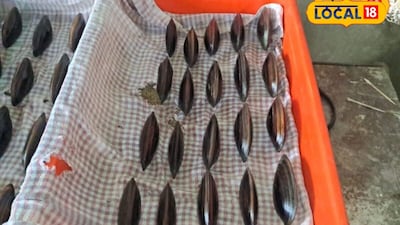
- •Oysters sourced from West Bengal undergo quarantine, surgery (nucleus insertion), 24-hour ICU care, and are then raised in a larger pond using the basket method.
Key Questions Answered
Farmer Ajay Kumar Mehta aims to earn 1.2 million rupees from 4,000 oysters placed in a 10-katha pond. He plans to insert about 8,000 nuclei into these oysters using scientific techniques.
The cost per oyster is approximately 50 rupees, bringing the total current expenditure to about 3 lakh rupees, which will also receive a government subsidy.
Oysters ordered from West Bengal are first quarantined in a small pond. Each oyster then undergoes surgery to insert two nuclei, is kept in an ICU for 24 hours, and is subsequently transferred to a larger pond using the basket method.