Stories
Why the Houthi Model of Warfare Should Alarm India
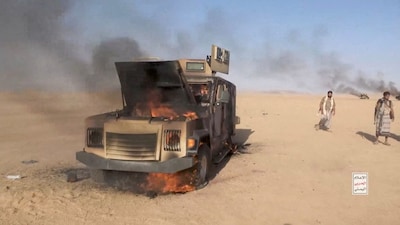
- •The Houthis demonstrate how non-state actors using cheap technology and artificial intelligence can threaten international shipping and impose disproportionate economic costs on powerful states.
- •India must look beyond continental borders to secure its vast maritime infrastructure, including offshore oil and gas installations, commercial shipping, and coastal facilities against asymmetric threats.
- •Periods of quiet in Jammu and Kashmir should not be mistaken for permanent peace, as hostile networks may use these lulls to regroup and adopt emerging technologies like drones and AI.
- •Political instability in Bangladesh and conflict in Myanmar create potential pathways for technological proliferation, threatening India's Northeast and the Siliguri Corridor.
- •India's national security strategy must move beyond conventional deterrence to integrate intelligence, persistent surveillance, counter-drone systems, and infrastructure resilience.
Key Questions Answered
Reports indicate that operators in Houthi-controlled Yemen attempted to exploit Anthropic's Claude AI system for missile-related engineering tasks, including software development for long-range ballistic missiles and guided rockets, though it did not establish that an operational AI-designed weapon was successfully deployed.
The Houthi model demonstrates how non-state actors using accessible technology can threaten international shipping, impose heavy economic defense costs, and target critical maritime infrastructure. Since much of India's economic strength relies on uninterrupted maritime access, offshore energy facilities, and ports across the Arabian Sea and its western approaches, these asymmetric tactics present a major national security challenge.
The relative quiet in Jammu and Kashmir should not be mistaken for the disappearance of hostile intent or permanent disengagement by terrorist networks. Periods of reduced violence can be used by groups associated with figures like Hafiz Saeed and Masood Azhar to regroup, rebuild networks, acquire new unmanned and AI-assisted technologies, and prepare for future attacks against vulnerable infrastructure.