Stories
PTI Long March Deepens Pakistan Political Crisis And Civil Military Imbalance
N
News18•10-10-2026, 15:08
PTI Long March Deepens Pakistan Political Crisis And Civil Military Imbalance
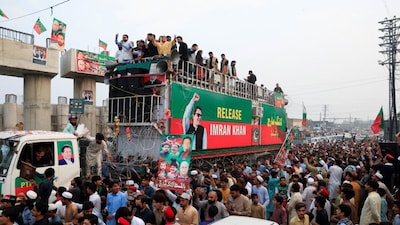
- •The Pakistan Tehreek-e-Insaf launched its long march to Islamabad after failed talks with the federal government, demanding the release of imprisoned former Prime Minister Imran Khan.
- •Both the government and PTI have hardened their stances, publicly signalling a desire for dialogue while exchanging sharp rhetoric and blaming each other for the ongoing political deadlock.
- •Political infighting and continuous instability in Pakistan have historically allowed the military establishment to manoeuvre forces and maintain dominance over governance and foreign policy.
- •Mass protests and populist movements like the PTI reflect a persistent public struggle against centralized institutional control and a demand for constitutional supremacy in Pakistan.
- •Analysts note that political instability and the cycle of protests ultimately benefit the military, which has repeatedly exploited civilian divisions to assert its political influence.
Key Questions Answered
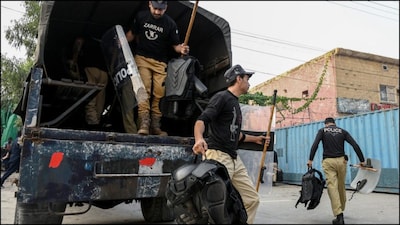
After postponing its long march on the eve of September 27, the PTI finally set out on the march on October 4.
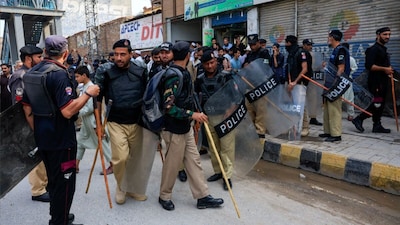
Interior Minister Mohsin Naqvi warned against the march, stating that Sohail Afridi would be held responsible if even a single person died.
Khyber-Pakhtunkhwa (KP) is the only province that currently has a PTI government.