Stories
From Corridor to Network: Why IMEC Must Evolve for a World of Disruption
- •The India-Middle East-Europe Economic Corridor (IMEC), conceived in 2023, faces challenges due to geopolitical crises, highlighting the need for a more resilient design.
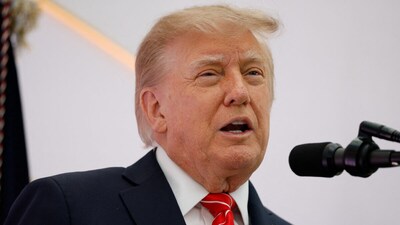
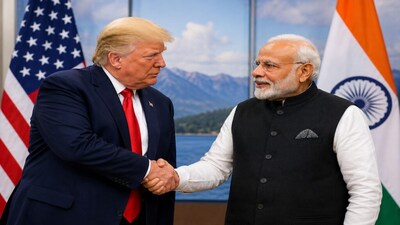
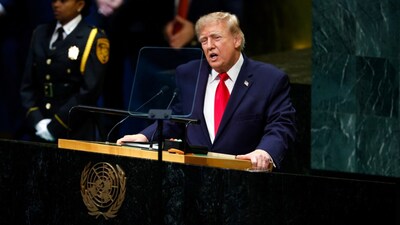
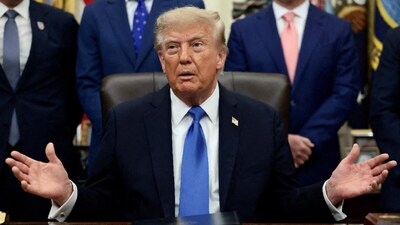
- •US President Donald Trump's renewed endorsement of IMEC underscores its political visibility, especially amid Middle Eastern energy infrastructure vulnerabilities and Strait of Hormuz security concerns.
- •The core question for IMEC is whether it remains a vulnerable corridor or transforms into a resilient network with redundant routes and diversified infrastructure.
- •Diversification examples like Fujairah's alternative maritime gateway and Oman's strategic location outside the Strait of Hormuz offer blueprints for a more robust IMEC.
- •IMEC's future should be a "mesh" of diversified routes and infrastructure, integrating with India's manufacturing strategies and focusing on economic utility beyond geopolitical competition.
Key Questions Answered
Conceived in 2023, IMEC is an ambitious infrastructure project linking India, the Arabian Gulf, and Europe through an integrated system of ports, railways, roads, energy infrastructure, and digital connectivity. It was established by India, the US, Saudi Arabia, the UAE, the EU, France, Germany, and Italy to strengthen Eurasian trade supply chains.
Geopolitical conflicts and maritime chokepoints like the Strait of Hormuz expose a linear corridor to severe vulnerabilities. To withstand regional instability, IMEC must function as a distributed mesh system with diverse routes, multi-port gateways, alternative rail lines, and independent energy infrastructures.
The UAE is developing alternative gateways outside the Strait of Hormuz, such as Fujairah. Etihad Rail and AD Ports Group launched a direct freight service connecting Fujairah Terminals to Abu Dhabi's Industrial City, allowing cargo to bypass risky maritime choke points via inland rail.