Stories
How India Mastered Its BRICS Chairmanship and Redefined the Bloc's Future
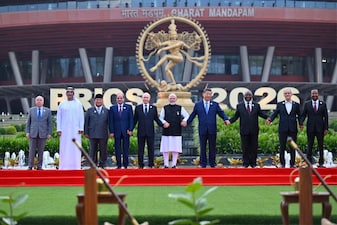
- •India successfully hosted the 18th BRICS summit at Bharat Mandapam, securing a consensus on a 140-paragraph declaration despite deep geopolitical divisions among members.
- •The summit facilitated a high-level meeting on the sidelines between Iran's President Masoud Pezeshkian and Abu Dhabi's Crown Prince Sheikh Khaled bin Mohamed bin Zayed, aiding regional de-escalation.
- •New Delhi shifted the bloc's narrative from disruptive de-dollarization rhetoric to practical financial de-risking, enhancing cross-border payment efficiency and local-currency lending.
- •The declaration adopted a firm stance on the Middle East, condemning starvation as warfare and calling for civilian protection while maintaining balanced ties with Western and non-Western powers.
- •India leveraged its G20 playbook by organizing over 350 meetings across 25 cities and delivering practical outcomes like a Startup Innovation Fund and a proposed BRICS Risk Lab at GIFT City.
Key Questions Answered
Hosted at Bharat Mandapam on September 12–13, 2026, the summit adopted the longest declaration in BRICS history at 140 paragraphs by consensus on opening day. Key practical outcomes included a Startup Innovation Fund, digital public infrastructure repository, counter-terrorism action plan, and the proposed Brics Risk Lab at GIFT City for infrastructure reinsurance capacity.
New Delhi lowered tensions by avoiding a push for a common currency or anti-Western rhetoric, focusing instead on financial de-risking. The declaration emphasized faster cross-border payments, local-currency lending via the New Development Bank, and building options to protect members if Western financial systems are weaponized.
Iran's President Masoud Pezeshkian and Abu Dhabi's Crown Prince Sheikh Khaled bin Mohamed bin Zayed held their highest-level meeting since the war began, agreeing to put past differences behind them. India successfully provided a trusted venue for adversaries while maintaining balanced partnerships with Washington, Tehran, Abu Dhabi, and Tel Aviv.