Stories
Gopal Patha: The Forgotten Butcher Who Saved Calcutta During the Great Killings of 1946
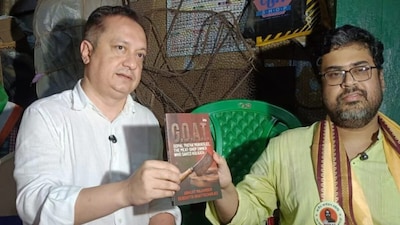
- •The book explores the untold story of Gopal Patha, a butcher who became a pivotal figure in defending Calcutta's Hindu population during the 1946 Direct Action Day violence.
- •The Muslim League's call for 'Direct Action' on August 16, 1946, aimed to annex Calcutta for Pakistan by orchestrating mass murders and a Hindu exodus, with support from Bengal's Prime Minister Huseyn Suhrawardy.
- •Calcutta, the largest and most economically vital city in British India, was targeted despite its 64% Hindu population, leading to a planned genocide to shift demographics.
- •Gopal Patha, a meat shop owner, organized a force of 800-1,000 young men, leveraging bomb-making knowledge and akhada culture, to mount a Hindu resistance against the widespread violence.
- •Within two days of Hindu retaliation, the Muslim League sought a ceasefire, highlighting the effectiveness of the organized defense led by Gopal Patha, whose story has largely been erased from mainstream historical narratives.
Key Questions Answered
Gopal Patha, whose real name was Gopal Chandra Mukherjee, was a 33-year-old meat-shop owner in Calcutta who organized a resistance force of hundreds of young men on August 16, 1946. He coordinated neighborhood-level Hindu retaliation and counter-attacks during the Direct Action Day violence to protect local neighborhoods.
Declared by the Muslim League, August 16, 1946, marked 'Direct Action Day' to push for the creation of Pakistan. Calcutta was selected because it was the British empire's economically vital colonial hub, which the Muslim League wanted to secure as part of Pakistan by shifting demographics through mass violence.
Wikipedia's editors deleted the biographical entry for Gopal Patha in 2023, an omission that reflects censorship and the neglect of this grim chapter of Indian history in mainstream historical discourse.