Stories
Ex-Envoy Warns: Islamist Footholds Entrenched in Bangladesh, Tarique Rahman "Playing with Fire"

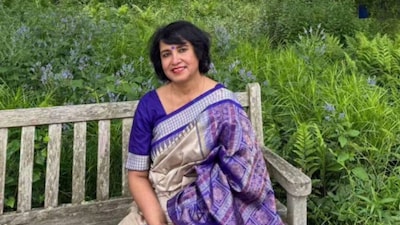
- •Former Indian High Commissioner Veena Sikri states Bangladesh's current leadership is "playing with fire" by empowering Jamaat-e-Islami and Pakistan, following Sheikh Hasina's ouster.
- •Sikri argues the 2024 political transition was a "meticulously designed regime-change operation," not a spontaneous uprising, raising questions about the Yunus government's legitimacy.
- •She criticizes Prime Minister Tarique Rahman for not lifting restrictions on the Awami League, questioning the credibility of future elections without their participation.
- •Sikri highlights Rahman's anti-India stance and alignment with China and Pakistan, noting his disregard for Indian diplomatic overtures and strategic sensitivities.
- •The former diplomat expresses grave concern over the "existential crisis" faced by minorities in Bangladesh, citing increased attacks and institutional backing for extremist elements.
Key Questions Answered
Former diplomat Veena Sikri described the 2024 political transition in Bangladesh as a carefully planned regime-change operation rather than a spontaneous student uprising. She warned that Prime Minister Tarique Rahman is playing with fire by allowing Jamaat-e-Islami and Pakistan to dictate terms, while maintaining a ban on the Awami League and failing to curb the growing entrenchment of Islamist footholds.
Prime Minister Tarique Rahman has taken an anti-India stance, opting to visit China first instead of New Delhi and moving forward with strategically sensitive projects like the Mongla Port and Teesta River initiative. Furthermore, Dhaka has linked Rahman's proposed visit to India for the BRICS summit to the creation of a conducive environment and the extradition of former prime minister Sheikh Hasina.
Veena Sikri highlighted that minorities, particularly Hindus, face an existential crisis in Bangladesh due to a severe increase in the frequency and intensity of targeted attacks, job losses, and institutional backing of fundamentalist elements. These attacks, alongside ongoing media suppression and the long-term imprisonment of figures like Chinmoy Das, reflect poorly on the current regime's democratic credentials.