Stories
Demography Panel's Religious Data Drive: Crucial for India's Future, Say Experts
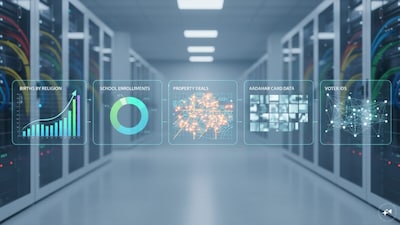
- •The High-Level Committee on Demographic Changes (HLCDC) is seeking 15 years of religion-wise data on births, school enrolments, property deals, Aadhaar cards, and voter IDs from Indian states.
- •The data collection aims to identify patterns in demographic changes, cross-referencing datasets to detect abnormal surges and potential illegal activities.
- •Previous commissions, like the Sachar Committee and Rangnath Mishra Commission, also recommended religion-based data collection for policy purposes, indicating it's not a new concept.
- •Tracking data over 15 years can help safeguard social welfare benefits, electoral rolls, and public distribution systems by identifying unnatural spikes in documentation.
- •The HLCDC's work can protect local populations from cross-border infiltrators and prevent tribal land grabbing, as seen in cases like the jamai tolas of Jharkhand.
Key Questions Answered
Chaired by retired Supreme Court judge Justice Prakash Prabhakar Naolekar and constituted by the Ministry of Home Affairs on May 26, 2026, the committee examines demographic changes arising from illegal immigration and other abnormal reasons. It has asked states for 15 years of religion-wise data covering births, school enrolments, property deals, Aadhaar cards, and voter IDs to track patterns and address national security and social structure concerns.
The committee is chaired by retired Supreme Court judge Justice Prakash Prabhakar Naolekar. Its members include the Census Commissioner, former IAS officer Durga Shankar Mishra, former IPS officer Balaji Srivastava, and economist Shamika Ravi, with the Joint Secretary (Foreigners-I) in the Ministry of Home Affairs serving as the Member Secretary.
Some non-BJP states and political parties have opposed the questionnaire, with the CPI(M) urging the Tamil Nadu government to boycott the committee and Congress leader Jairam Ramesh calling it a diabolical agenda. Additionally, state officials have noted that departments do not ordinarily maintain much of the requested information on a religion-wise basis due to the constitutional framework.