Stories
Beyond the Old Frame: How AI is Redefining Human Mastery and the Future of Work

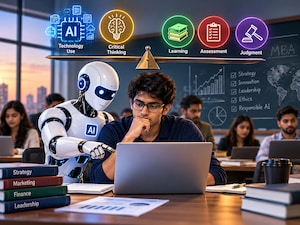
- •AI is compressing the cost of producing competent first-order work, shifting the true value of expertise toward judgment, critical thinking, and verification.
- •Traditional educational and professional hurdles often treat outdated technological obstacles as permanent measures of human merit and capability.
- •As routine cognitive tasks become automated, mastery moves upward to directing machines, spotting weak assumptions, and asking better questions.
- •Institutions must adapt by modernizing how they test learning and competence, focusing less on manual repetition and more on strategic decision-making.
- •Human skills and perspectives must evolve alongside technology, moving beyond legacy standards to embrace the next ascent of productivity.
Key Questions Answered
AI compresses the cost and time required to produce competent first-order work. Tasks like structuring arguments, analyzing datasets, writing code, or drafting reports that once took years of practice or hours of labor can now be completed in minutes.
When basic technical skills become cheap and accessible, mastery shifts upward to higher-level competencies. The focus moves toward judging whether outputs are useful, spotting weak assumptions, testing results, and deciding what tasks require human direction or oversight.
Institutions must separate genuine capability from outdated technological rituals and avoid treating old obstacles as permanent measures of merit. Schools and employers need to shift from testing routine execution to evaluating how well individuals can challenge answers, detect errors, and make critical decisions.