Stories
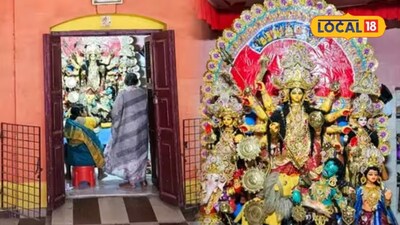
Ancient 19-Day Durga Puja Traditions Still Thrive in Amadpur Zamindarbari

- •The Durga Puja at Amadpur Zamindarbari in Memari follows traditions that are over three and a half centuries old.
- •Preparations begin on Rath Yatra when clay from Radhamadhab chariot wheels is applied to the idol framework.
- •The Durgotsav spans 19 days in total, featuring 14 days of continuous Chandi Path starting from Krishna Navami.
- •Goddesses Lakshmi and Saraswati are uniquely crafted without any mounts to prevent them from leaving.
- •The idol immersion follows an ancient ritual where it is carried across the village on shoulders with lit torches.
Key Questions Answered
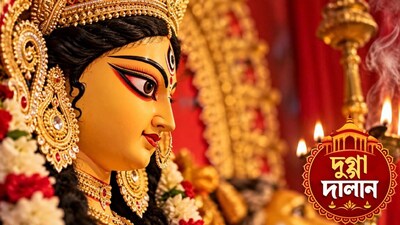
The Durga Puja at Amadpur Zamindarbari in Memari, East Bardhaman, features a 19-day festival involving 14 days of continuous Chandi Path starting from Krishna Navami. Preparation begins on Rath Yatra when clay is applied using soil from Radhamadhab's chariot wheels. Goddess Durga is worshipped as Mahishasuramardini. Uniquely, Lakshmi and Saraswati have no mounts to prevent them from leaving, and offerings consist of whole fruits on a mound of rice rather than cooked anna bhog. On Sasthi, women eat a fish tail before welcoming the Goddess, and the final immersion involves carrying the idol on shoulders around the village with lit torches.
The family's historical roots connect to Dohi Sensharma, a court poet of King Lakshman Sen and colleague of poet Jaydev. Later, two family members received Majumdar and Chowdhury titles from the Mughals. The family deity Radhamadhab was brought from Murshidabad by Krishna Ram Sensharma, who built both the Radhamadhab temple and the original durgadalan opposite it where Durga Puja commenced.
The idols of Goddess Lakshmi and Saraswati do not feature any mounts, driven by the family belief that vehicles would allow the goddesses to leave. For the naivedya, a grand offering of one mound of sun-dried rice is arranged alongside raw vegetables and whole fruits, served with sweets like luchi, mohanbhog, khir, chhana, coconut nadu, and rosakora, with no tradition of cooked rice bhog.