Stories
How the RSS became the opposition's convenient culprit
- •A viral video from a recent protest in Delhi was amplified by opposition leaders to falsely claim that RSS supporters attacked a female protester.
- •Independent fact-checkers revealed that the video featured a male, not a female, and was part of a doctored disinformation campaign.
- •The opposition and hard-left parties frequently target the RSS due to historical ideological differences and a desire to discredit the BJP's mentor.
- •The deeper ideological contest involves contrasting the Western rights-based social contract framework with India's civilisational view of nationhood.
- •Despite repeated bans and ongoing smear campaigns, the RSS continues its extensive grassroots network and social service projects across India.
Key Questions Answered
Following the October 10 protest in Delhi, a viral video falsely claimed that BJP-RSS goons had beaten a girl wearing a black T-shirt while Delhi Police watched. Independent fact-checkers later revealed that the person in question was actually a boy, and footage from another angle showed a crowd kicking a car with a Jai Shri Ram sticker.
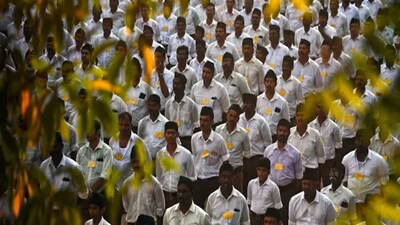
The Rashtriya Swayamsevak Sangh has completed 100 years and was previously banned by Congress governments in 1948, 1975, and 1992. Following each ban, the organization emerged even stronger with millions of volunteers meeting daily across thousands of shakhas.
The opposition relies on a Western framework where the nation-state is a social contract built on tax-paying citizens receiving rights. In contrast, the RSS holds a civilisational view where the nation is seen as a mother rather than property, balancing rights with duties and treating the world as one family.