Stories
Why Trump’s Voluntary AI Accord Falls Short in Regulating Big Tech

- •President Donald Trump's White House Accord on Super Intelligence relies on voluntary commitments from major tech companies without enforcing meaningful penalties or mandatory standards.
- •Commercial pressures and the intense race for technological dominance create inherent conflicts of interest, making self-regulation unreliable when public safety and corporate goals diverge.
- •The historical failure of social media self-regulation demonstrates that allowing powerful technologies to scale unchecked leads to severe, long-term societal consequences.
- •Geopolitical competition, particularly involving China, means that voluntary agreements in the US cannot bind global competitors or address the wider strategic realities of the AI race.
- •Effective AI governance requires independent regulatory authority, mandatory oversight, transparency, and continuous adaptation rather than relying solely on corporate goodwill.
Key Questions Answered
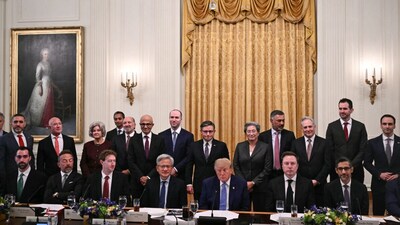
Six major technology companies, including Google, Meta, OpenAI, Nvidia, Anthropic, and xAI, signed a voluntary commitment covering internal controls, oversight, external evaluation, and review. President Donald Trump described the pact as morally binding, though it lacks a meaningful penalty regime, does not require companies to publish external assessment findings, and leaves safeguard implementation to corporate discretion.
Critics argue that commercial incentives in the competitive AI race make it difficult to institutionalize voluntary restraint. Because private economic rewards for moving fast often outweigh uncertain public costs, powerful industries require external constraints rather than self-policing, echoing past issues with social media platforms.
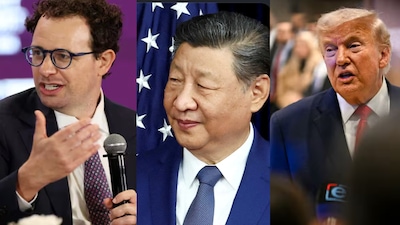
The accord does not bind Chinese technology companies, which are competing for capability and strategic advantage within a different political system where state leadership views AI as central to national power. Consequently, the voluntary framework cannot resolve a broader geopolitical race where advanced technological advantage has become a strategic objective.