Stories
Old Criticisms Resurface as RSS Gains Global Visibility
- •Recent international visits by RSS Sarsanghchalak Mohan Bhagwat have triggered a familiar offensive against the organization, with critics using recurring themes to undermine its success.
- •Critics frequently accuse the RSS of majoritarianism and endangering minorities, often relying on selective quotes without context, despite the RSS's stated position that all Indians are part of the same civilizational family.
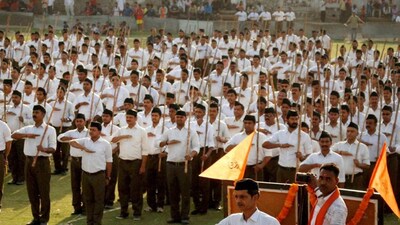
- •The RSS is often labeled 'fascist' by Western and Marxist political scientists, drawing comparisons to interwar European movements; however, the RSS attributes supreme position to the Saffron Flag, not a leader, and lacks an expansionist military doctrine.
- •The 'secrecy' and 'shadow state' narrative is challenged by the RSS's public shakhas, accessible information on its website, and regular public addresses and press conferences.
- •Criticisms intensify when the RSS increases its public visibility, with its civilizational and cultural international engagement often viewed through Western political frameworks rather than its own terms.
Key Questions Answered
The RSS maintains that everyone tracing their ancestry to Indian soil belongs to the same civilisational family regardless of faith, running millions of welfare projects for marginalized groups without discrimination and providing disaster relief to all.
Critics compare the RSS to European fascist paramilitaries by pointing to its discipline, uniforms, and cadre structure. The RSS rejects this as intellectually dishonest, noting that unlike fascist movements, it lacks a supreme leader or expansionist doctrine, holding the Saffron Flag as its guru instead.
The RSS refutes secrecy claims by pointing out that its shakhas are held in public places with open entry and exit, its affiliated organizations publish annual reports and structures online, and senior functionaries routinely hold press conferences and public addresses.