Stories
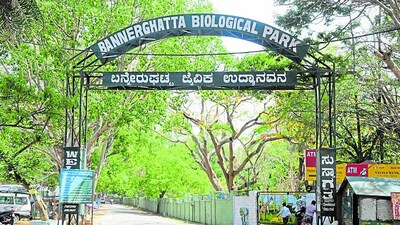
Bannerghatta National Park Under Threat: Mindless Development vs. Wildlife Conservation
- •The Bannerghatta National Park ecosystem, a vital wildlife corridor connecting 8,000-9,000 elephants across four states, faces severe threats from rampant 'development'.
- •Illegal mining, quarrying, and massive residential projects by the Karnataka Housing Board (KHB), including the 70,000-site Suryanagar project, are encroaching upon the park.
- •Rapid urbanization has blocked critical elephant corridors, leading to a significant increase in man-animal conflict, largely ignored by authorities.
- •The Union Ministry of Environment, Forests and Climate Change (MoEFCC) drastically reduced the Eco-Sensitive Zone (ESZ) boundary in 2020, weakening protection for the park.
- •A Supreme Court-appointed Central Empowered Committee (CEC) report in 2026 revealed "shocking" encroachments by the Karnataka government, recommending restoration of the original ESZ and withdrawal of the diluted notification. The Karnataka High Court also quashed land acquisition for the Suryanagar project due to environmental concerns.
Key Questions Answered
On August 31, 2026, the Karnataka High Court quashed the acquisition of 1,938 acres for the project due to environmental concerns, its proximity to the Bannerghatta National Park, and the absence of mandatory clearances, including from the National Wild Life Board. The court ruled that no public purpose can supersede environmental and ecological conservation, noting that the project falls within the park's eco-sensitive zone and would cause irreversible environmental and wildlife consequences.
The Central Empowered Committee (CEC) filed a 524-page report on January 5, 2026, detailing shocking encroachments by the Karnataka government. The report revealed that ecologically important patches were excluded from the notified Eco-Sensitive Zone (ESZ) without scientific justification, including five blue polygons (elephant corridors) spanning 3,502 acres. The CEC recommended that the ESZ delineation remain ecology-driven and that the original 268.96 sq km ESZ be fully restored.
A petition filed before the National Green Tribunal (NGT) has challenged the Karnataka Housing Board's plan to build a Rs 2,350 crore sports complex, which includes an 80,000-seat international cricket stadium, within a 2 km radius of the Eco-Sensitive Zone. Following the first hearing, the NGT directed that notices be served to the State Government, senior forest department officials, and the KHB to seek replies regarding the alleged violations.