Stories
Gyanesh Kumar's Silence, Justice Datta's 4 Blows, and 'Supreme' Questions on 2-vs-1 Policy.
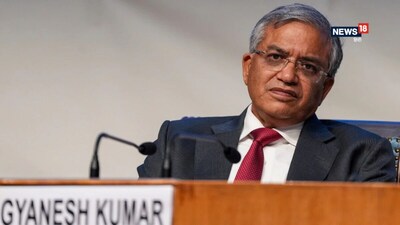
- •Gyanesh Kumar, who previously reacted strongly to Rahul Gandhi's allegations after Maharashtra results, is now silent.
- •Pressure mounts on the Election Commission after an Indian Express report revealed Chief Election Commissioner Gyanesh Kumar does not listen to other Election Commissioners.
- •The Supreme Court questioned the appointment process of Election Commissioners, with Justice Dipankar Datta and Justice Satish Chandra Sharma's bench disagreeing.
- •Justice Datta raised four questions regarding the selection committee's structure, questioning the impartiality of a cabinet minister and the role of the Leader of the Opposition.
- •The Supreme Court is hearing petitions challenging the 2023 law governing the appointment of the Chief Election Commissioner and Election Commissioners.
Key Questions Answered
The Supreme Court is reviewing petitions challenging the 2023 law because it excludes the Chief Justice of India from the selection panel, replacing him with a Union Cabinet minister. Justice Dipankar Datta raised concerns that this creates an executive veto, ensuring the government maintains a two-to-one majority over the Leader of the Opposition and undermining the poll panel's perceived institutional independence.
An Indian Express investigation revealed internal friction within the three-member Election Commission, reporting that Chief Election Commissioner Gyanesh Kumar allegedly did not heed his two fellow commissioners. The other commissioners reportedly raised objections multiple times over decisions made without their knowledge, creating intense scrutiny alongside a massive voter roll revision affecting over 13 crore names.
In 1993, during T.N. Seshan's tenure as Chief Election Commissioner, the P.V. Narasimha Rao government faced operational difficulties due to his independent stance and passed an ordinance to increase the number of Election Commissioners to three. This established a multi-member body where decisions during disagreements were resolved by a majority vote, keeping the posts, salaries, and powers of all commissioners equal.