Stories
Cyclone Threat: IIT Kharagpur Study Reveals Severe Impact On Deep Groundwater Reserves.
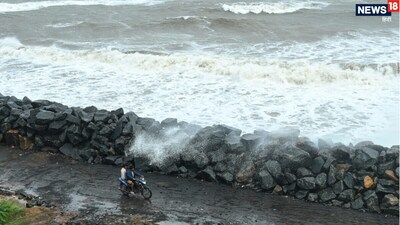
- •A study by IIT Kharagpur reveals that powerful cyclones can adversely impact deep groundwater reserves.
- •The research shows that extreme weather can affect groundwater quality more than 100 meters below the surface.
- •The study examined extreme weather events in the Sundarbans within the Ganga-Brahmaputra-Meghna delta.
- •Researchers analyzed 11 extreme weather events between May 2017 and May 2020, including four cyclones.
- •The findings emphasize the urgent need for depth-specific groundwater management and continuous monitoring.
Key Questions Answered
A study by IIT Kharagpur revealed that powerful cyclones can adversely affect the quality of deep groundwater reserves located more than 100 meters underground. These extreme weather events can rapidly alter groundwater levels and flow directions, thereby increasing the risk of fresh and saline water mixing and threatening drinking water security in coastal regions.
The researchers examined 11 extreme weather events between May 2017 and May 2020, which included 7 low-pressure systems and 4 cyclones named Titli, Fani, Bulbul, and Amphan. The study focused on the Sundarbans, situated in the Ganga-Brahmaputra-Meghna delta.
Researchers recommended continuous groundwater monitoring at various depths and integrating extreme weather forecasts with extraction and water-resource management plans. They also advised strategically locating wells away from areas vulnerable to seawater intrusion and treating each aquifer based on its unique depth and characteristics rather than as a uniform system.