Stories
Fruit or Juice for Kids? Know the Right Age and the 120 ML Rule!
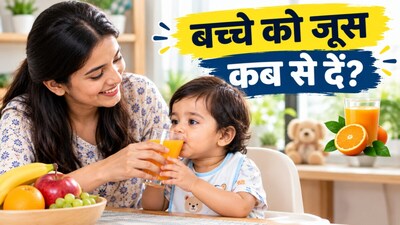
- •Avoid giving juice to children under one year of age, as breast milk or formula is their primary nutrition source.
- •According to American Academy of Pediatrics (AAP) guidelines, fruit juice should not be given to children under one year.
- •Children aged 1 to 6 years should not be given more than about 4 ounces (approximately 120 milliliters) of juice at a time.
- •Whole fruit provides pulp and fiber, which are often reduced or eliminated in juice.
- •Avoid packaged or tetra-pack juices; homemade fresh juice is a better option, but don't consider it a substitute for whole fruit.
Key Questions Answered
According to the American Academy of Pediatrics (AAP) and pediatrician Dr. Ravi Malik, fruit juice should be completely avoided and not given to children under one year of age. During this early stage, breast milk or formula milk serves as the vital and primary source of nutrition for the child.
Dr. Ravi Malik advises that children aged 1 to 6 years should be limited to consuming no more than approximately 4 ounces, which equals about 120 milliliters, of juice at any one time. Parents must ensure that giving small amounts does not automatically turn into an unhealthy daily habit.
Whole fruits provide essential pulp and fiber that slow down digestion and help children develop healthy chewing habits and texture recognition. In contrast, the juicing process often removes or reduces fiber, leaving high amounts of free sugars that can negatively shape a child's food preferences.