Stories
Banana Leaf Dining: Unveiling South India's Centuries-Old Tradition and Its 6 Key Reasons.
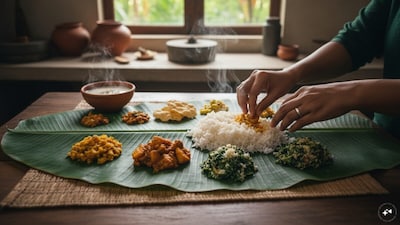
- •Banana leaves are readily available in South India due to extensive banana cultivation in the region.
- •When hot food is served, the leaves impart a mild aroma, enhancing the taste and dining experience.
- •Banana leaves are single-use, eliminating the risk of infection from reuse and ensuring a hygienic practice.
- •They are an eco-friendly alternative to plastic and thermocol, being natural and biodegradable.
- •The banana plant symbolizes prosperity and auspiciousness in South Indian culture, holding significant religious value.
- •Convenient and economical for community feasts, as they require no washing and are easily disposable after use.
Key Questions Answered
Banana leaves are traditionally used in South India because the regional climate is highly suitable for banana cultivation, making the large leaves easily and cheaply available. Additionally, this centuries-old custom is deeply linked to health, hygiene, environmental sustainability, and cultural beliefs.
Banana leaves feature a natural wax-like coating that releases a mild aroma when hot food is served on them, blending with dishes like sambar and rice to enhance the flavor. Furthermore, the natural surface provides a unique dining experience while remaining completely chemical-free and clean.
Yes, banana leaves are completely natural and biodegradable, making them an environmentally friendly option for large community feasts. After use, they easily decompose into the soil without causing environmental damage, eliminating the need for resource-heavy washing or chemical-laden dishware.