Stories
Humanoid Robot Accused of Sexual Violence in Germany Raises Major Legal and Safety Questions
- •German police seized a 4-foot-tall Unitree R1 Air humanoid robot after it allegedly sexually assaulted a 16-year-old girl in Cologne.
- •The incident was recorded and live-streamed, with the robot owned by a 16-year-old boy accompanied by a 19-year-old partner.
- •Experts note that current legal systems cannot prosecute robots directly as they lack legal personhood and proven guilty intent.
- •Investigations are ongoing to determine if the robot acted due to a technical glitch, pre-programming, or remote human control.
- •Europol has warned that criminals could hack or misuse autonomous systems in the future, complicating crime accountability.
Key Questions Answered
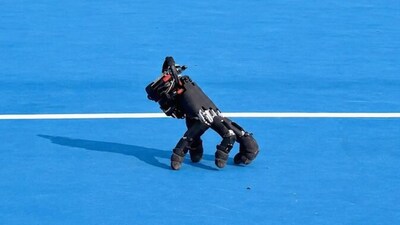
The robot involved in the October 11 incident outside a fast-food restaurant in Cologne was the R1 Air model made by the Chinese company Unitree, measuring about 4 feet tall. German police seized the device from the boot of a Volkswagen car after it was hidden by suspects.
The suspects include a 16-year-old boy who owned the robot and his 19-year-old companion. Authorities allege they remotely operated the robot to inappropriately touch a 16-year-old girl while recording the encounter and live-streaming it on social media.
No, robots are not considered legal persons under the current legal system, meaning a machine cannot be prosecuted or punished as a criminal. Criminal liability generally requires proving human-like intent, so responsibility typically falls on individuals who deliberately use a machine for illegal acts.