Stories
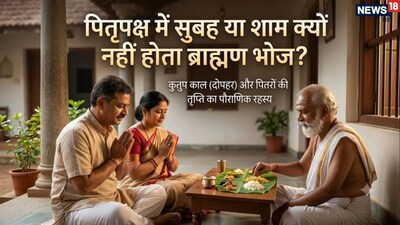
Pitru Paksha 2026: Why is Brahmin Bhoj performed at noon? Significance of Kutup Muhurat!
- •Pitru Paksha is a special time in Hinduism for devotion, gratitude, and remembrance of ancestors, observed from Ashwin Krishna Paksha Pratipada to Amavasya Tithi.
- •During Pitru Paksha, traditions like Tarpan, Pind Daan, and Brahmin Bhoj are followed for the peace and salvation of ancestors' souls.
- •Brahmin Bhoj is performed at noon during Shraddha rituals because this period is considered suitable for ancestral rites, with the sun high in the sky, ensuring special significance for offerings.
- •The afternoon is dedicated to ancestors in scriptures, unlike morning/evening for divine tasks or night for negative energies; ancestors reside in the middle realm, receiving their share from the sun at midday.
- •Kutup Kal, typically 11:30 AM to 12:30 PM (48 minutes), is the most auspicious time for Shraddha rituals, as its energy ensures offerings directly reach ancestors and absolves sins.
Key Questions Answered
In Hindu traditions, morning and evening are designated for divine tasks, while the afternoon is considered the time for ancestors. Midday is dedicated to the ancestors who reside in the middle realm, allowing them to receive their share of offerings through the sun.
Kutup Kal is an auspicious period around noon, typically lasting for 48 minutes, where the sun's rays and energy help the offered food and water directly reach the ancestors. The term 'Kutup' means 'destroyer of evil' or sins, making it the paramount time for Tarpan and Pind Daan.
Pitru Paksha begins on the Pratipada Tithi of the Krishna Paksha of Ashwin month and lasts until Amavasya. During this period, traditions like Tarpan, Pind Daan, Panchabali karma, donations, and Brahmin Bhoj are performed for the peace and salvation of ancestors' souls.