Stories
Why Pakistan Army Fails Locally Despite 4 Wars Against India
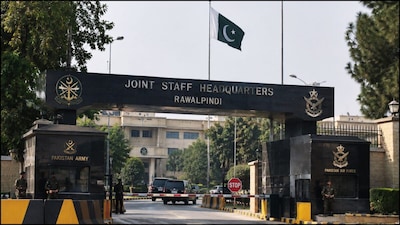
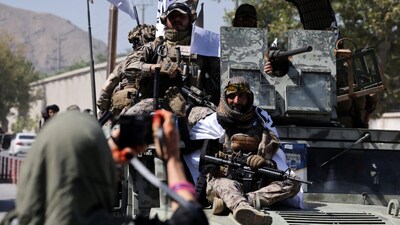
- •The Pakistani Armed Forces were historically structured for conventional warfare against India, making their heavy artillery and jet aircraft ineffective against irregular warfare in rugged terrains like Khyber Pakhtunkhwa and Balochistan.
- •The military's long-standing foreign policy of maintaining 'strategic depth' by using militant groups like the Afghan Taliban as assets backfired when the Tehreek-e-Taliban Pakistan turned against the state.
- •Military strategist David Galula's counter-insurgency principles emphasize that crushing internal rebellions requires 80 percent political and informational efforts, whereas the Pakistan Army has historically relied solely on hard military power.
- •Aisha Siddiqa's book 'Military Inc.' highlights that the army's deep involvement in corporate, real estate, and industrial empires distracts its top command from professional war-craft and internal security readiness.
- •The absence of a robust civil policing system, combined with porous cross-border sanctuaries along the Durand Line, leaves the army constantly trapped in a cycle of short-lived military victories against groups like TTP and BLA.
Key Questions Answered
The Pakistan Army's doctrine was historically designed for conventional warfare against India, featuring heavy artillery and armor unsuited for irregular warfare. When deployed in rugged terrain against groups like the TTP and BLA, heavy weaponry destroys infrastructure while rebels blend into the local population. Furthermore, reliance solely on hard military power without civil intelligence or political solutions leads to short-lived victories.
Pakistan's historical 'Strategic Depth' policy involved nurturing Afghan militants and proxy groups as state assets to project influence. After the 2001 US intervention in Afghanistan, these networks—particularly the Tehreek-e-Taliban Pakistan (TTP)—turned against the Pakistani state, establishing parallel authority inside the country and trapping the military in a crisis of its own creation.
The Pakistan Army holds vast commercial interests in corporate, real estate, banking, and cement industries through institutions like the Fauji Foundation and Army Welfare Trust. This heavy involvement in running business empires, controlling political balance, and managing bureaucracy divides the high command's focus, severely degrading its professional war-fighting capability and strategic concentration on internal security.