Stories
Trishul Missile: DRDO's Dream That Remained a Demonstrator, The Full Story.
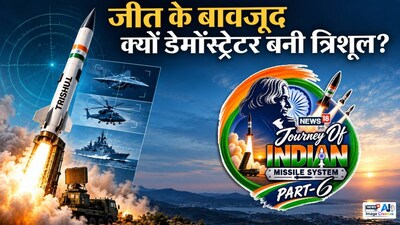
- •In 1983, the 'Integrated Guided Missile Development Program' (IGMDP) was founded under Dr. APJ Abdul Kalam, including Prithvi, Agni, Akash, Nag, and Trishul.
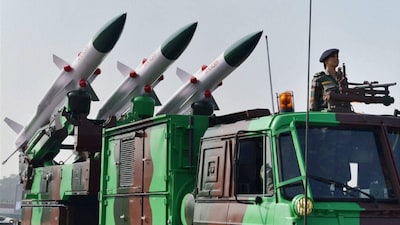
- •Trishul was conceived as a quick-reaction surface-to-air missile with a range of 9-12 km and twice the speed of sound.
- •On June 5, 1989, Trishul made its first successful flight from Chandipur, making India one of the few countries with surface-to-air missile technology.
- •Technical difficulties arose with Trishul's radar and guidance software due to the challenge of destroying 'sea-skimming' cruise missiles for the navy.
- •After continuous budget increases, decades of delays, and declining interest from the armed forces, Trishul was declared a 'Technology Demonstrator' in 2007-08, preventing its induction as an active weapon system.
Key Questions Answered
Trishul was conceived as a quick-reaction surface-to-air missile under the Integrated Guided Missile Development Program launched in 1983. It originally featured a range of 9 to 12 kilometers, a speed twice that of sound, and was designed to destroy low-flying enemy fighter jets, helicopters, and anti-ship missiles.
The navy required a weapon to destroy sea-skimming cruise missiles flying just above water, but Trishul's command guidance system and tracking radar faltered as radar beams scattered off ocean waves. After more than 80 tests failed to meet naval standards, the navy opted to purchase Israel's Barak-1 system instead.
Due to decades of delays, increasing budgets, and declining armed forces interest, Trishul was officially declared a technology demonstrator in 2007-08 rather than an active weapon system. While it was never deployed on the front lines, the technologies acquired from it helped lay the groundwork for future projects.