Stories
India Faces Major Naval Crisis as Submarines Retire Without Immediate Replacements
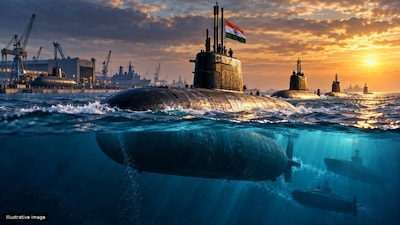
- •The Indian Navy faces an escalating challenge as its existing submarine fleet rapidly ages while new procurement plans suffer severe delays.
- •Under a 1998 plan, India aimed to acquire 24 conventional submarines by 2030, but four Sindhughosh-class vessels have retired with only six Kalvari-class submarines inducted.
- •India's strategic nuclear submarine program has progressed faster with INS Aridhaman strengthening the nuclear triad and carrying K-4 missiles.
- •Project 75I worth ₹70,000 crore aims to procure six to nine state-of-the-art conventional submarines equipped with Air-Independent Propulsion technology.
- •Future blueprints like Project 76 and Project 77 focus on indigenous conventional and nuclear attack submarines to secure India's maritime power.
Key Questions Answered
Formulated under a 30-year plan in 1998, the target to acquire 24 conventional submarines by 2030 fell behind schedule because four Sindhughosh-class submarines were already retired while only six Kalvari-class submarines were inducted to replace them.
Project 75I is a tender worth approximately ₹70,000 crore to procure six to nine advanced conventional submarines. India and Germany's ThyssenKrupp Marine Systems cleared technical evaluations, and the first submarine will take about seven years to deliver after contract signing.
AIP technology allows a conventional submarine to remain submerged underwater for two to three weeks without needing to surface. Standard submarines must surface frequently to recharge batteries, which significantly increases their risk of detection by aircraft and warships.