Stories
UPSC Toppers' Choice: Why 'India After Gandhi' is Essential for Civil Services Exam.
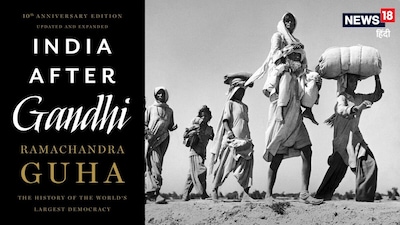
- •'India After Gandhi' by Ramachandra Guha is a comprehensive book on independent India's history, first published in 2007.
- •The nearly 900-page book is based on extensive research, including government documents, private letters, and old newspaper records.
- •It's crucial for UPSC as it helps candidates connect events and write analytical answers, going beyond mere factual recall.
- •Key topics covered include partition, princely states' merger, constitution-making, linguistic states, Emergency, and economic liberalization.
- •Its simple, narrative writing style, incorporating speeches and personal experiences, makes complex history accessible and memorable for aspirants.
Key Questions Answered
Authored by historian Ramachandra Guha and first published in 2007, India After Gandhi is a nearly 900-page comprehensive book providing a detailed history of independent India after 1947. It explains how India changed following independence, detailing the decisions that shaped the nation and their subsequent impacts on society and politics through a continuous narrative built from government documents, archives, and historical records.
UPSC toppers and successful candidates frequently recommend the book because it goes beyond simple facts, helping candidates understand and connect historical events to write strong, analytical answers in the Mains exam. The book's narrative style simplifies complex post-independence political and social shifts, making it easier for aspirants to recall key references and historical examples.
The book covers a wide range of critical topics including the country's partition, the refugee crisis, the merger of princely states, constitution-making, early general elections, linguistic state reorganization, and the Kashmir issue. It also explores major historical milestones like the 1962 and 1965 wars, Northeast insurgencies, the Naxalite movement, the Emergency, the Green Revolution, and the 1991 economic reforms.