Stories
Major NTA Exam Reforms Proposed: Question Papers to Be Finalized Just Before Exams
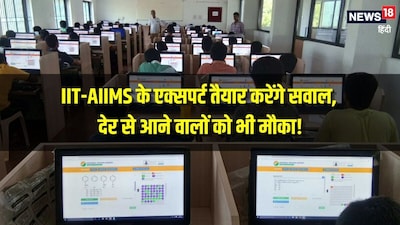
- •A parliamentary standing committee has recommended major reforms for NTA to prevent paper leaks and address student concerns.
- •The committee suggested creating a continuous question bank and finalizing question papers close to the exam date.
- •Recommendations include conducting NEET-UG on computers and setting up at least one government exam center in every district.
- •NTA is advised to build its own permanent employee cadre and reduce dependence on private exam agencies.
- •A proposal has been made to allow genuine late-arriving students to take the exam for the remaining duration without extra time.
Key Questions Answered
To prevent paper leaks, the parliamentary standing committee recommended creating a large and continuously updated question bank from which questions are selected very close to the exam date, thereby avoiding pre-printed question papers that require transport. Additionally, it suggested transitioning competitive exams like NEET-UG to a computer-based test format and adopting a hybrid model with digital question papers sent directly for secure local printing until full CBT infrastructure is ready.
The committee recommended establishing at least one government examination center in every district to reduce student travel and costs, alongside setting up 1,000 national computer-based test centers. To eliminate vulnerabilities tied to private contractors, ownership and operations should rest with central or state governments, and NTA offices have been relocated to a new facility secured by 39 CISF personnel.
The committee proposed allowing candidates who arrive a few minutes late due to genuine reasons to take the exam for the remaining duration after signing a written consent, rather than facing direct disqualification. Furthermore, the agency has been advised to accelerate its recruitment process to build a permanent employee cadre for exam management, security, and technical tasks, complementing recent structural overhauls that include the replacement of panel experts and implementation of a four-tier scrutiny mechanism.