Stories
Korean Stocks Struggle for Buyers as Once-Hot AI Trade Fades
- •South Korea's $4.3 trillion stock market is losing investor relevance, with turnover collapsing 70 percent from its peak in late May.
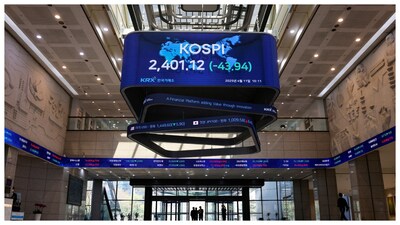
- •The Kospi index plummeted 22 percent in the second half of the year after being the world's best-performing major benchmark in the first half.
- •Market fortunes heavily hinge on memory-chip giants Samsung Electronics and SK Hynix, whose concentration has become a liability amid waning demand skepticism.
- •Foreign funds have pulled record amounts from Korean stocks this year, while local retail investors remain hesitant following a brutal summer leverage-driven selloff.
- •Competing Asian hub Taiwan is gaining favor among investors due to its broader technology hardware ecosystem and more robust earnings outlook.
Key Questions Answered
South Korean stocks are losing relevance as investors question the durability of the memory-chip boom cycle, driven by heavy reliance on Samsung and SK Hynix. Additionally, a brutal leverage-driven summer selloff and massive foreign capital outflows have made global funds hesitant to return.
Samsung Electronics and SK Hynix together account for over half of the Kospi's weighting, driving its massive ascent earlier in the year. However, this heavy concentration has turned into a liability as skepticism grows over memory chip demand, causing the index to drop significantly in the second half.
Investors prefer Taiwan equities because they offer a more complete technology hardware ecosystem, broader-based stock gains, and more robust spending plans from major tech companies. Furthermore, Taiwan's Taiex Index has significantly outperformed the Kospi amid a more upbeat earnings outlook.