Stories
India's Ingenious Solution: Mid-Sea Oil Transfers Amidst Reduced Russian Supply.
- •Despite reduced oil supply from Russia due to US-Iran conflict and Ukrainian attacks, India faces no crude oil shortage.
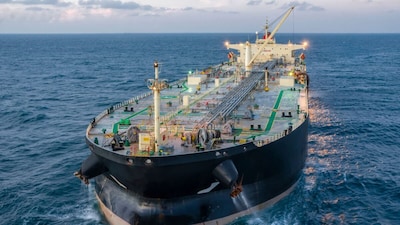
- •India is now receiving substantial crude oil from Gulf countries via 'ship-to-ship' (STS) transfers.
- •STS involves small shuttle tankers crossing dangerous straits to transfer oil to larger tankers in safer international waters.
- •In September, India's oil imports from Iraq surged by 238.2% to over 510,000 BPD, with increased purchases from Saudi Arabia and Kuwait.
- •India's Russian oil imports decreased by approximately 9% to 1.9 million BPD in September, a five-month low, yet Russia's share remained over 35%.
Key Questions Answered
Exporting countries load crude into a small shuttle tanker that crosses the risky Strait of Hormuz to bear the full transit danger. Once it reaches a safe international maritime area outside, a large anchored tanker transfers the oil through pipes to depart directly for Indian ports, removing heavy transport risks from India.
In September, India's oil imports surged across several Gulf nations: purchases from Iraq jumped by 238.2% to over 510,000 barrels per day (BPD), Saudi Arabia increased by 56.2% to about 543,000 bpd, Kuwait rose 104.4% to 317,000 bpd, and Qatar supplied about 110,000 bpd after zero imports in August. Overall, the share of these five West Asian suppliers rose from 26% in August to 36.7% in September.
India's Russian oil imports fell by roughly 9% in September to 1.9 million barrels per day (bpd) down from 2.1 million bpd in August, marking a five-month low. This decline was driven by Ukrainian drone attacks on Russian oil and gas infrastructure affecting availability, alongside increased purchases by Chinese refineries.