Stories
Europe's Regulatory Burden Boosts India's Cost Advantage, Says Piyush Goyal
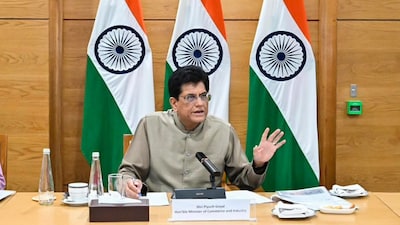
- •Commerce Minister Piyush Goyal states Europe's increasing regulatory requirements could shift businesses to India, giving India a cost advantage.
- •Goyal highlighted India's growing economic power, negotiating trade agreements as a $4 trillion economy aiming for $30 trillion.
- •India's trade agreements are structured for benefits beyond market access, securing significant investment commitments like $100 billion from EFTA and $20 billion from New Zealand.
- •Goyal warned that Europe's over-regulation could undermine its businesses' competitiveness, citing 73 new EU regulations his office is tracking.
- •The minister also addressed challenges for Indian exporters, including direct shipping, and noted India's booming startup ecosystem and projected semiconductor demand.
Key Questions Answered
Commerce and Industry Minister Piyush Goyal warned that Europe's growing regulatory requirements increase production costs, making its businesses less competitive and creating opportunities for India. He noted that excessive regulations on items like automobiles, steel, and cement could make European goods and infrastructure more expensive, ultimately giving Indian exporters a cost advantage.
Speaking at the PAFI Annual Forum 2026, Piyush Goyal stated that India is currently negotiating trade agreements as a $4 trillion economy, which ranks as the third-largest globally at around $20 trillion on a purchasing power parity basis. He added that the country is actively working toward expanding into a $30 trillion economy.
Piyush Goyal highlighted that India's trade agreements are structured to secure benefits beyond preferential market access, such as a $100 billion investment commitment under the EFTA agreement and a $20 billion commitment from New Zealand. Additionally, the UK agreement includes a social security arrangement, and Australia removed a double-tax provision affecting Indian IT companies and service providers.