Stories
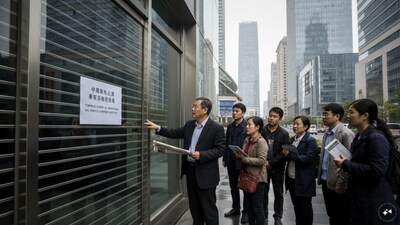
China Shuts Down 670 Banks Amid Economic Crisis and Real Estate Crash

- •Fitch Ratings revealed that China shut down or merged 670 banks, accounting for nearly a quarter of its total banks.
- •The closures are part of a restructuring campaign to eliminate weak small and rural banks burdened by debt and corruption.
- •Public savings are safe as closed banks were merged rather than declared bankrupt, transferring accounts to larger institutions.
- •Small banks suffered heavily due to the real estate sector crash and high non-performing loans reaching 2.8 percent.
- •China's aggressive financial cleanup comes as its GDP growth rate slipped to 4.3 percent in the second quarter.
Key Questions Answered
China accelerated a consolidation campaign to clean up its financial system by eliminating weak, loss-making small and rural commercial banks and merging them into larger, better-capitalized institutions. This move aims to tackle economic challenges, reduce corruption, and make it easier for the government to monitor financial operations.
The hard-earned savings of the general public have not been lost. The banks were not shut down through bankruptcy, but rather through mergers, meaning that customer accounts, deposits, and loans from the small rural banks are simply being transferred to larger banks.
These banks weakened because they blindly distributed heavy loans to small builders, local government agencies, and local companies, leaving them trapped when China's real estate sector crashed. Consequently, their non-performing loans rose to 2.8% while their return on assets plummeted to 0.45%.