Stories
FlyDubai Flight: How Boeing 737 Max Design and Safety Layers Averted Disaster
M
Moneycontrol•03-10-2026, 18:57
FlyDubai Flight: How Boeing 737 Max Design and Safety Layers Averted Disaster
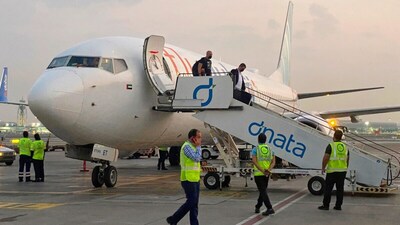
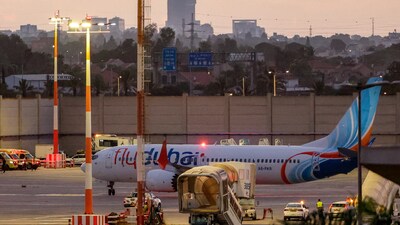
- •A FlyDubai Boeing 737 Max experienced a near-catastrophic incident involving a pilot attack and rapid descent, yet landed safely in Saudi Arabia.
- •The aircraft plummeted almost vertically at one point, descending at over 32,000 feet per minute, but its design and safety redundancies helped it survive.
- •Preliminary data indicates the aircraft reached speeds near 690 mph during its dive, close to the speed of sound at that altitude.
- •The plane's rudder was torn off, a critical event, but the 737 Max's robust design and certification for extreme conditions allowed for recovery.
- •Off-duty pilots and passengers intervened to stabilize the situation, highlighting the importance of multiple safety layers and human intervention.
Key Questions Answered
The aircraft survived extreme maneuvers, including near-supersonic speeds and a near-vertical dive, thanks to rigorous certification testing, strict regulatory stress limits, and aviation's layers of redundancy.
After the co-pilot attacked the captain, passengers rushed forward to pull the attacker away, with one passenger utilizing controls to arrest the rapid dive. Off-duty pilots on board then took control of the airplane to land safely in Saudi Arabia.
The Boeing 737 features two central horn-shaped steering yokes that were intuitive for an amateur passenger to grab and pull back, unlike the side-stick controllers used on Airbus aircraft.