Stories
Vikram Solar Secures 400 MW Module Order for Maharashtra Solar Projects
- •Vikram Solar has secured a 400 MW module supply order from a leading EPC company in India for decentralized solar projects across Maharashtra.
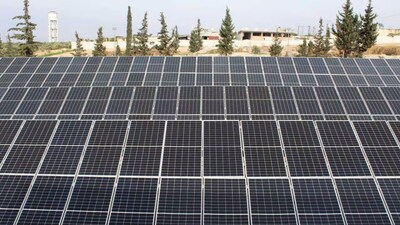
- •The order involves supplying 620 Wp high-efficiency N-Type TOPCon G12R modules with glass-to-glass, bifacial technology, and half-cut cells.
- •Supplies are scheduled to commence in October 2026 and be completed by March 2027, strengthening Vikram Solar's presence in the agricultural-feeder solarisation segment.
- •Gyanesh Chaudhary, Chairman & MD, highlighted the importance of programs like MSKVY 2.0 in India's clean energy journey and the confidence in Vikram Solar's advanced G12R TOPCon technology.
- •This order follows Vikram Solar's recent ’1,250 crore solar cell supply agreement with Avaada Electro Ltd for 1 GW of ALMM-compliant N-Type G12R TOPCon solar cells.
Key Questions Answered
Vikram Solar secured a 400 MW module supply order from a leading EPC company in India for decentralised solar projects across multiple locations in Maharashtra. Under this one-time domestic order, the company will supply high-efficiency N-Type TOPCon G12R modules featuring glass-to-glass, bifacial technology and half-cut cells with a 620 Wp power output. Supplies will start in October 2026 and finish by March 2027.
According to Vikram Solar's Chairman and Managing Director Gyanesh Chaudhary, programs like MSKVY 2.0 represent an important evolution in India's clean energy journey by bringing solar power benefits closer to farmers and agricultural communities. Supplying modules for these projects strengthens Vikram Solar's presence in the agricultural-feeder solarisation segment across Maharashtra.
In September 2026, Vikram Solar entered into a ₹1,250 crore domestic solar cell supply agreement with Avaada Electro Ltd to procure 1 gigawatt (GW) of ALMM-compliant N-Type G12R TOPCon solar cells. Deliveries are scheduled to begin in September 2026 to support Vikram Solar's module manufacturing operations and diversify its cell supply chain.