Stories
Public vs. Private Markets: Cricket Analogy Illuminates Wealth Creation Debate
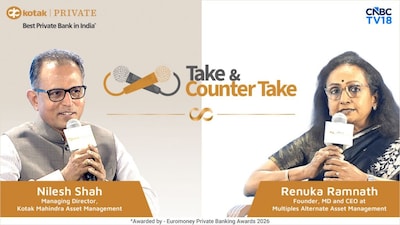
- •Nilesh Shah of Kotak Mahindra Asset Management used a cricket analogy to explain market performance, comparing a bad quarter to a single bad innings by Rohit Sharma, emphasizing that short-term performance doesn't define long-term value.
- •The "Take and Counter Take" event, curated by Kotak Private Banking, debated whether the future of wealth creation is shifting from public to private markets, as companies stay private longer and create significant value before IPOs.
- •Renuka Ramnath, Founder, MD, and CEO of Multiples Alternate Asset Management, argued for early-stage private investing, highlighting active involvement in shaping companies and managing risk as key to generating returns above public markets.
- •Shah countered with another cricket analogy, likening private market players to coaches developing talent (like Ramakant Achrekar and Sachin Tendulkar) and public market players to selectors building a winning team (like Ajit Agarkar), suggesting both are crucial for overall success.
- •The discussion concluded that both public and private markets are vital for wealth creation, with the key being an investor's positioning within a company's lifecycle to maximize returns, balancing early access and illiquidity with liquidity and transparency.
Key Questions Answered
At a Kotak Private Banking event in Bengaluru, veteran fund managers discussed whether wealth creation is shifting to private markets. While private markets allow investors to shape companies early on, public markets provide liquidity, transparency, and scale once firms mature.
Private equity allows investors to sit on boards and actively shape company growth, strategy, and governance before public listing. However, it requires significant manager selection, conviction, and a high tolerance for capital illiquidity over multi-year fund tenures.
Nilesh Shah compared private-market players to grassroots coaches like Ramakant Achrekar who discover and develop raw talent, whereas public-market players act like selectors who assemble established teams to win matches at scale.