Stories
Hingoli Hit by Another Earthquake: Why Frequent Tremors and How Much Danger?
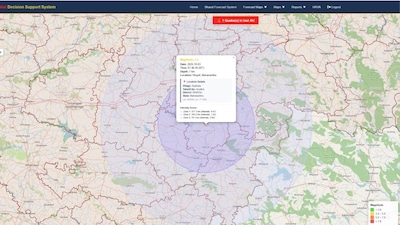
- •Hingoli district experienced another mild earthquake in the Gadala area of Aundha Nagnath taluka, continuing a series of tremors.
- •The earthquake, with a magnitude of 3.3 on the Richter scale, was felt around 7:46 AM in Gadala and surrounding villages.
- •Frequent tremors in Marathwada are attributed to the movement of underground geological fissures and increased pressure from water seepage during monsoon.
- •According to seismologists, this part of Hingoli and Marathwada is not considered highly dangerous.
- •Earthquakes of magnitude 3 to 4 are mild and generally cause no major damage, apart from minor cracks in unreinforced houses.
Key Questions Answered
The mild earthquake, measuring 3.3 on the Richter scale, was caused by the movement of underground geological fissures in the Marathwada region. Experts explain that internal pressure builds up when water seeps into the ground during and after the monsoon, increasing underground rock movements and triggering seismic waves.
Earthquakes in this region typically measure between 3 and 4 on the Richter scale, falling into the mild category. Seismologists state that this part of Hingoli and Marathwada is not considered highly dangerous, and such intensities generally do not cause major damage except for minor cracks in unreinforced houses.
The district administration immediately assessed the situation and confirmed that no loss of life or property occurred. Officials appealed to citizens to remain calm, avoid panicking, and refrain from believing any rumors.