Stories
Wildfires Rise in Some Indian Reserves While Falling in Others
F
Firstpost•20-10-2026, 15:41
Wildfires Rise in Some Indian Reserves While Falling in Others
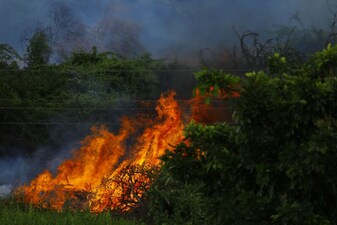
- •Researchers at the Centre for Wildlife Studies in Bengaluru tracked fire trends across 13 wildlife reserves in Central India, the Eastern Ghats, and the Western Ghats from 2002 to 2022.
- •Burned areas increased by about 9.3 percent annually in the Eastern Ghats and 4.6 percent in Central India, while dropping by about 10.8 percent a year in the Western Ghats.
- •Nearly all forest fires are human-caused, driven by activities such as gathering forest produce, clearing land, or cattle grazing, though drought and weather conditions heavily influence the intensity.
- •Experts warn that excessive fires destroy young tree seedlings and favor fire-resistant grasses, whereas a lack of fire in the Western Ghats could dangerously reduce open grasslands for herbivores.
- •The authors advise moving away from blanket fire suppression toward tailored management strategies that consider local communities, wildlife habitats, and climate monitoring.
Key Questions Answered
Researchers found that burned areas increased in the Eastern Ghats by about 9.3 percent annually and in Central India by roughly 4.6 percent annually, whereas the Western Ghats experienced a decline of about 10.8 percent per year.
Nearly all forest fires are started intentionally or accidentally by people, while weather conditions—specifically hot, dry years and drought—serve as the strongest statistical driver across 11 of the 13 reserves.
The authors advise against blanket fire exclusion and aggressive suppression, recommending tailored approaches that consider specific habitats, local community burning practices, year-round climate monitoring, and early-warning systems.