Stories
Why Your Ears Feel Blocked After Flying and How to Prevent It
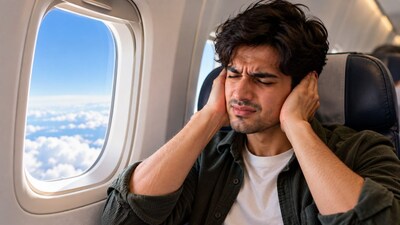
- •Ear barotrauma or aeroplane ear happens due to rapid changes in cabin pressure during flight descents.
- •The Eustachian tube helps equalise pressure, but congestion from colds or allergies can block this process and cause pain or muffled hearing.
- •Simple actions like yawning, swallowing, drinking water, or chewing gum during take-off and landing can help prevent blocked ears.
- •Consult a doctor before flying if you are congested, and avoid forceful attempts to pop your ears to prevent injury.
- •Seek immediate medical attention for severe pain, sudden hearing loss, dizziness, bleeding, or persistent symptoms.
Key Questions Answered
The discomfort, known as aeroplane ear or ear barotrauma, is primarily caused by changes in cabin pressure during flight, especially during descent. When an aircraft descends, cabin pressure increases, and if the Eustachian tube cannot allow air into the middle ear quickly enough, the resulting pressure difference pulls the eardrum inwards, causing pain, a feeling of fullness, and muffled hearing.
A blocked or inflamed Eustachian tube makes it much harder for the middle ear to equalise pressure. Conditions like a cold, sinus infection, or nasal allergies can cause inflammation in the tube, increasing the likelihood of experiencing ear pressure and pain during a flight, particularly during descent.
Most episodes of aeroplane ear resolve on their own once environmental pressure normalises. However, you should seek immediate medical evaluation if you experience severe warning signs such as sudden hearing loss, severe pain, spinning dizziness, bleeding, or if the blocked sensation and reduced hearing do not go away.