Stories
Unlocking the Mystery: Why Airplane Doors Open Inward, Not Outward
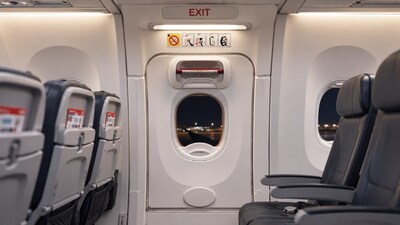
- •Airplane doors are designed as "plug-type" doors that open inward first, then move outward or sideways, primarily due to cabin pressure at cruising altitude.
- •At high altitudes, the cabin is pressurized for passenger comfort, creating a powerful outward force that pushes the door tighter into its frame, making it impossible to open mid-flight.
- •This inward-opening design is a crucial safety feature, ensuring the door cannot be accidentally blown open or forced open easily, even if mechanical locks fail.
- •Outward-opening doors would require extremely heavy locking systems to resist cabin pressure, increasing aircraft weight, reducing fuel efficiency, and raising operational costs.
- •While different aircraft types have variations, the core principle of using cabin pressure as a natural locking force for inward-opening doors is central to commercial aviation safety.
Key Questions Answered
Airplane doors open inward primarily because of cabin pressure at cruising altitude. Since the cabin is pressurized, the internal pressure pushes the door tighter into its frame, acting as a natural locking mechanism and ensuring it cannot be accidentally opened mid-flight.
A plug door is an engineered safety component that is slightly larger than the space it seals. When the aircraft is pressurized at altitude, the force from inside pushes the door securely against its frame, using physics to reinforce its seal rather than requiring heavy locking systems.
No, airplane doors cannot be randomly opened mid-air under normal conditions. The intense pressure difference between the inside and outside of the aircraft creates thousands of kilograms of force holding the door shut, making it impossible for human effort or mechanical failure to overcome.