Stories
The Curious Tale of Sleemanabad: From a British Captain to a Modern Engineering Marvel
- •The village of Sleemanabad in Madhya Pradesh was named after British officer William Henry Sleeman in the 1830s after he helped settle landless labourers into agriculture.
- •A memorial stone outside the Sleemanabad police station features a Tamil inscription dedicated to a soldier who fought with the Madras Artillery unit during the 1857 revolt.
- •The village also features a grim historical reminder in the form of a tall tree within the police station complex used by the British to hang captured revolutionaries.
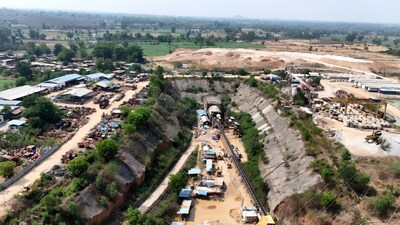
- •Sleemanabad is currently witnessing a massive engineering feat with the construction of the nearly 12-kilometre-long Sleemanabad Tunnel as part of the Bargi Diversion Project.
- •Set to be India's longest gravity-driven water flow tunnel, the project will channel Narmada water to drought-prone areas, benefiting over 1400 villages.
Key Questions Answered
Sleemanabad was named in honour of British captain William Henry Sleeman. After finding a community of landless labourers in Khokha during the 1830s, Sleeman arranged for them to receive 96 acres of government land, which transformed them into agriculturists and led them to rename their settlement.
The Tamil inscription is located on a memorial stone erected by the Madras Artillery unit to honour a soldier who fell during a clash on November 6, 1857. While the exact rank and name are unclear, some accounts mention a colonel or a gun lascar named Ramaswami, providing a rare historical artifact more than a thousand kilometres from Tamil Nadu.
The Sleemanabad Tunnel is a nearly 12-kilometre-long, gravity-driven water flow tunnel forming the backbone of Madhya Pradesh's Bargi Diversion Project. Completed to channel Narmada water through the Vindhya mountain range, it will benefit over 1,400 villages across Katni, Panna, Maihar, Rewa, and Satna.