Stories
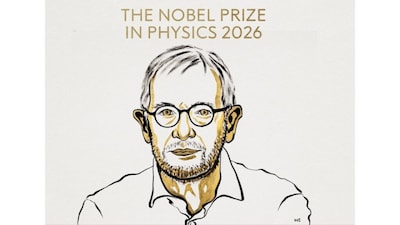
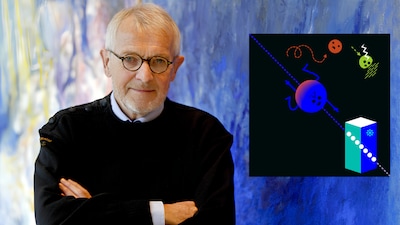
Francis Halzen Wins 2026 Nobel Prize in Physics for IceCube Neutrino Discovery
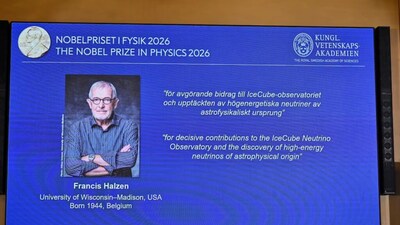
- •Belgian-American physicist Francis Halzen has been awarded the 2026 Nobel Prize in Physics for his pioneering contributions to the IceCube Neutrino Observatory.
- •Halzen conceived the idea of transforming a cubic kilometre of Antarctic ice into a massive telescope capable of detecting elusive high-energy astrophysical neutrinos.
- •The IceCube detector uses thousands of light sensors embedded deep in the Antarctic ice to capture faint flashes produced when neutrinos interact with matter.
- •Neutrinos can travel vast distances and pass through dense matter without being blocked, providing astronomers with a brand-new way to study the universe.
- •Halzen is a professor at the University of Wisconsin-Madison and has previously received numerous prestigious scientific honors including the Balzan Prize and Bruno Rossi Prize.
Key Questions Answered
Belgian-American particle physicist Francis Halzen won the 2026 Nobel Prize in Physics for his decisive contributions to the IceCube Neutrino Observatory and the discovery of high-energy neutrinos of astrophysical origin.
IceCube is a massive neutrino detector built deep beneath the Antarctic ice at the South Pole, utilizing thousands of light sensors embedded in the ice to detect faint flashes produced when neutrinos interact with matter.
Neutrinos are electrically neutral subatomic particles that interact with matter very rarely, allowing them to travel vast distances and through dense matter without being deflected or absorbed. This provides astronomers with a unique way to study violent cosmic events that are difficult to observe with conventional telescopes.