Stories
DRDO Successfully Tests Indigenous High-Altitude Parachute at 16000 Feet
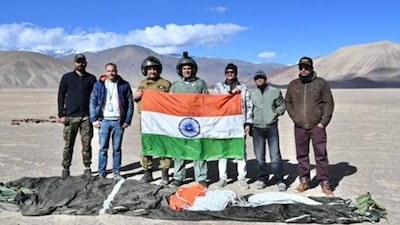
- •The Defence Research and Development Organisation conducted the maiden live jump of its Advanced High-Altitude Parachute at 16,000 feet in Nyoma.
- •The parachute was deployed at 15,500 feet and successfully landed at the Nyoma drop zone at an altitude of 13,700 feet.
- •The static-line parachute system is designed for the mass drop of paratroopers and was developed by DRDO's Agra-based ADRDE.
- •The system has an operational altitude range of up to 18,000 feet and was manufactured by the Ordnance Parachute Factory in Kanpur.
- •Defence Minister Rajnath Singh congratulated the teams involved, calling the successful test another step towards Aatmanirbhar Bharat.
Key Questions Answered
The Advanced High-Altitude Parachute (AHAP) is a static-line parachute system designed for the mass drop of paratroopers. It was developed by the Aerial Delivery Research and Development Establishment (ADRDE), a DRDO laboratory located in Agra.
The maiden live jump of the Advanced High-Altitude Parachute was conducted at 16,000 feet in Nyoma, which is one of India's highest-altitude drop zones. The parachute deployment occurred at 15,500 feet, and the landing took place at the Mudh drop zone at an altitude of 13,700 feet.
The high-altitude parachute system was manufactured by the Ordnance Parachute Factory in Kanpur, with inspection handled by the Directorate General of Aeronautical Quality Assurance and certification by CEMILAC and RCMA Kanpur.