Stories
World Mental Health Day 2026: Bridging the Generational Mental Health Gap

F
Firstpost•10-10-2026, 13:10
World Mental Health Day 2026: Bridging the Generational Mental Health Gap
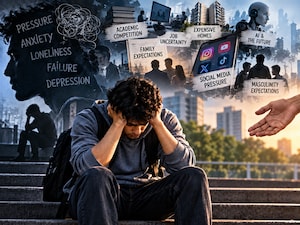
- •While youth mental health awareness is rising, the IC3 Institute report reveals that 64 percent of students still prefer dealing with stress themselves, and only 2 percent consult a therapist.
- •Parental stigma, fears of academic pressure, and privacy concerns often hinder students from speaking openly about their emotional struggles or seeking professional guidance.
- •Social media has increased awareness and vocabulary around mental health, but it has also contributed to challenges regarding self-diagnosis among young people.
- •Experts emphasize that parents and educational institutions must build trust, prioritize emotional well-being over academic performance alone, and make confidential counseling more accessible.
Key Questions Answered
According to the IC3 Institute's Student Well-being Pulse Report 2026, 64 per cent of students prefer to deal with stress themselves, while 49 per cent turn to friends and 44 per cent to family.
Despite high mental health awareness, young people often hesitate to seek professional help due to concerns about parental reactions, academic expectations, privacy, and the social stigma attached to a diagnosis.
Experts suggest parents make room for conversations not centered solely on academic achievement, listen without immediately offering solutions, and take emotional concerns seriously.