Stories
Iraq: A New US-Iran Battleground? Rubio's 'Balkanisation' Warning Explained
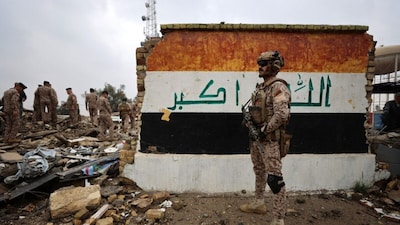
- •Iraq faces a difficult position with armed groups officially part of the state's security structure but maintaining independent weapons, commanders, and foreign links, as US troops prepare to leave.
- •US Secretary of State Marco Rubio warned of Iraq's "Balkanisation" if armed factions aren't controlled, referring to fragmentation into smaller, rival units, though the immediate risk is a weak central government struggling with powerful groups.
- •Iran-aligned armed factions possess significant military capabilities, political influence, and economic networks, creating a "state-within-a-state" problem that challenges Baghdad's authority.
- •Iraq's militias gained power through historical instability and the fight against ISIS, presenting themselves as defenders of sovereignty, leading to a dual-power structure where the government coexists with influential armed networks.
- •Despite some factions announcing plans to disarm, the deep political embedding of these groups, their electoral success, and the complex balancing act between US and Iranian influence make disarmament challenging for the Iraqi government.
Key Questions Answered
The Iraqi government initially set September 30 as the deadline for armed groups to disarm, coinciding with the planned departure of remaining US troops, but later pushed the completion date to June 30, 2027, with a new plan starting September 30 alongside a proposed 90-day ceasefire. However, several Iran-aligned factions have categorically rejected this deadline to surrender their weapons and integrate into state security forces.
Iraqi Counter-Terrorism Service forces arrested Abbas al-Yaqoubi, a senior Harakat al-Nujaba figure and PMF intelligence official suspected of leading attacks against neighbouring countries like Saudi Arabia. The arrest sparked immediate threats of escalation from militia-linked actors, and the judiciary dismissed the charges, leading to his release within two days and underscoring Baghdad's difficulty in asserting authority.
Parties linked to major armed factions won roughly 80 of the 329 parliamentary seats in Iraq's November 2025 elections, embedding them deeply in formal governance and giving leaders a direct stake in the political system. Operating under a dual-power structure, these groups possess advanced arsenals including drones and missiles while maintaining ties to Iran's Islamic Revolutionary Guard Corps, complicating Baghdad's security control.