Stories
H-1B Visa vs PERM: What Is the Difference and How US Decision Impacts Indian Tech Workers
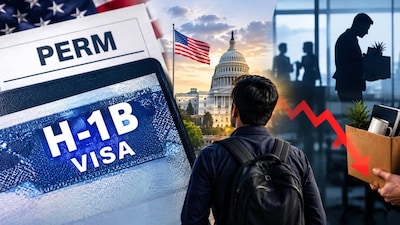
- •The US administration has suspended PERM applications for select major technology companies, throwing the permanent residency prospects of thousands of Indian tech workers into uncertainty.
- •India's Ministry of External Affairs clarified that PERM and H-1B are two separate programs, and the suspension does not automatically revoke the validity of currently active H-1B visas.
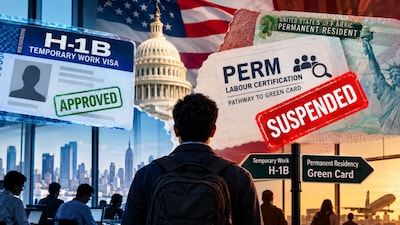
- •An H-1B visa is a temporary, non-immigrant work permit for skilled professionals, whereas PERM is a labor market certification process required as a key step toward obtaining an employment-based green card.
- •Affected companies include Microsoft, TCS, Infosys, Wipro, HCLTech, and others, with the US citing the protection of American workers as the motive behind halting the process.
- •While existing H-1B visa holders can continue working in the US, the delay in green card processing complicates long-term planning for Indian professionals nearing their visa limits.
Key Questions Answered
An H-1B visa is a temporary, non-immigrant work visa that allows foreign professionals with specific skills to work legally in the US for a limited time. In contrast, PERM (Program Electronic Review Management) is a labor market certification process administered by the Department of Labor that serves as a vital step for employers sponsoring workers for an employment-based green card.
The US administration suspended eight major technology and outsourcing companies from the PERM program, including Microsoft, Tata Consultancy Services (TCS), Infosys, Wipro, HCLTech, Cognizant, Adobe, and Capgemini.
No, the suspension of the PERM process does not automatically invalidate currently valid H-1B visas or force workers to immediately leave the United States. However, it creates uncertainty and potential delays for employees seeking permanent residency, especially those nearing the standard six-year H-1B limit.