Stories
Rockefeller's Warning: Don't Chase Money for Money's Sake
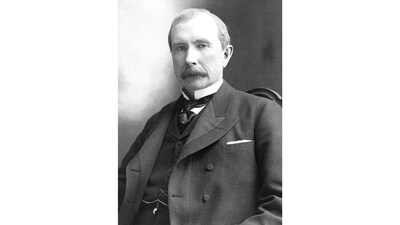
- •John D. Rockefeller, the oil tycoon, warned against making money the sole purpose of life, stating, "I know of nothing more despicable and pathetic than a man who devotes all the hours of the waking day to the making of money for money's sake."
- •Rockefeller, who built one of America's greatest fortunes with Standard Oil, questioned the pursuit of wealth as an end in itself, emphasizing that financial success should serve a broader purpose.
- •Born in 1839, Rockefeller co-founded Standard Oil in 1870, which dominated the US petroleum industry, though his business practices led to its breakup in 1911 due to antitrust violations.
- •His philosophy evolved to view wealth as a tool, not an identity, with his later life marked by extensive philanthropy in education, medicine, and public health, including founding the University of Chicago and the Rockefeller Foundation.
- •Rockefeller's enduring message distinguishes between ambition and obsession, urging reflection on the cost of relentless wealth pursuit and whether money serves life or life serves money.
Key Questions Answered
In his book Random Reminiscences of Men and Events, John D. Rockefeller wrote that he knew of nothing more despicable and pathetic than a person who devotes all waking hours to making money just for the sake of having it. He believed that while financial success provides security and opportunities, letting wealth accumulation become an all-consuming obsession creates an unhealthy imbalance in life.
John D. Rockefeller helped establish Standard Oil in 1870 after beginning his career as a teenage assistant bookkeeper in Ohio. The company expanded rapidly, controlling roughly 75 percent of the United States petroleum industry by the 1890s before the US Supreme Court ordered its breakup under federal antitrust law in 1911.
Starting in the 1890s and continuing through the establishment of the Rockefeller Foundation in 1913, Rockefeller directed vast sums of his fortune toward education, scientific research, and public health. His philanthropic efforts helped fund the University of Chicago, the Rockefeller Institute for Medical Research, and campaigns against hookworm disease in the American South.