Stories
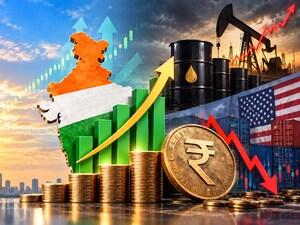
JPMorgan Warns India of Higher US Tariff Risks, Moderating Growth Momentum

- •JPMorgan's Jahangir Aziz expects India to face higher US tariff risks under the current US administration, though he doesn't see tariffs as the primary factor impacting recent growth.
- •India's 7.8% Q1 growth, below JPMorgan's 8% expectation, was supported by temporary factors like RBI rate cuts, regulatory easing, strong credit growth, and GST tax cuts, which are now fading.
- •India's goods exports are particularly vulnerable to potential US tariff actions, with uncertainty regarding timing and scale, though tariffs may be used as a negotiating tool rather than reaching 100%.
- •Luis Oganes of JPMorgan suggests 100% tariffs could initially spike crude oil prices to $120-$130/barrel, but this would be temporary as Russian oil finds alternative routes.
- •JPMorgan is more concerned about oil products like diesel and jet fuel, as higher fuel prices are already pressuring US consumers and contributing to inflation, potentially necessitating another Fed rate hike.
Key Questions Answered
JPMorgan's Jahangir Aziz expects India to remain exposed to higher US tariffs as long as the current administration is in power, noting that goods exports are in the line of fire. However, he emphasizes that tariffs are not the main reason to question India's recent growth momentum, noting that the first quarter's 7.8% growth was supported by temporary factors like RBI rate cuts, regulatory easing, strong credit growth, and GST cuts.
Luis Oganes of JPMorgan states that a move toward 100% tariffs could initially push crude oil prices sharply higher toward $120–$130 a barrel. However, he expects such a spike would be short-lived because Russian oil would eventually find alternative routes to reach global markets.
JPMorgan is more concerned about oil-product cracks, such as diesel and jet fuel, because higher fuel prices are already putting pressure on US consumers and hitting wallets at the pump. With diesel trading at high levels in the US, these derivative pressures are a more immediate concern and could prompt the Federal Reserve to deliver at least one more rate hike.