Stories
India's GST Reform Drives Automotive Sector to Record Growth and Aspiration Fulfillment

- •India's GST rate rationalization significantly boosted the automotive sector, exceeding expectations by stimulating demand and reinforcing long-term growth.
- •The reform simplified the tax structure, improved affordability, and led to a resurgence in demand, culminating in record sales for the industry.
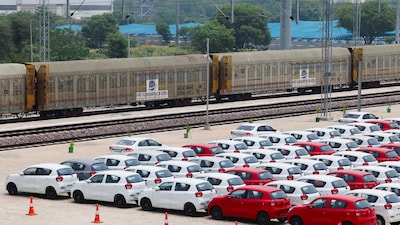
- •Passenger vehicle sales saw substantial growth in late 2025, with October, November, and December increasing by 17.2%, 18.7%, and 26.8% respectively, leading to a record 46.43 lakh units in FY2025-26.
- •GST rationalization enabled aspirations by lowering the threshold for vehicle ownership for first-time buyers and strengthening the value proposition for upgraders, accelerating premiumization.
- •Beyond consumers, the reform created a multiplier effect across the automotive value chain, particularly for suppliers, enhancing India's global competitiveness in manufacturing complex components.
Key Questions Answered
Following the GST reforms introduced in September, consumer demand strengthened significantly, enabling the passenger vehicle industry to close out FY2025-26 with record annual sales of 46.43 lakh units.
The reform lowered the threshold for vehicle ownership, allowing many first-time buyers to enter the personal mobility ecosystem. For customers seeking to upgrade, it improved affordability, accelerating the premiumisation trend toward safer and more technologically advanced vehicles.
As automakers introduce sophisticated products, suppliers are investing in advanced manufacturing technologies and higher-value capabilities. This capability build-up enables Indian suppliers to design and manufacture complex components that meet global standards, enhancing the industry's competitiveness.