Stories
Khavda Transmission Corridor: Powering India's Green Transition & Maharashtra's Growth

N
News18•22-09-2026, 10:45
Khavda Transmission Corridor: Powering India's Green Transition & Maharashtra's Growth
- •India is accelerating its clean-energy transition, targeting 500 GW of non-fossil fuel capacity by 2030, with over 300.5 GW already achieved.
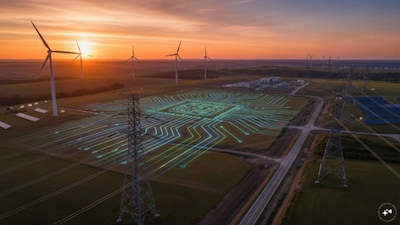
- •The Khavda region in Gujarat is becoming a major renewable-energy hub, necessitating high-capacity transmission corridors like Khavda IV-C.
- •The Khavda IV-C project, spanning 306 Circuit KM in Maharashtra, acts as an "electricity highway" to deliver green power from Gujarat to Maharashtra.
- •This infrastructure is crucial for Maharashtra's economic growth ambitions, including its vision of becoming a USD 1 trillion economy, by enabling industrial expansion and urban development.
- •The project will strengthen power supply reliability in regions like Bhiwandi, Shahapur, Wada, and Vikramgad, and feed into existing lines, easing grid load and promoting sustainable economic growth.
Key Questions Answered
India is targeting 500 GW of non-fossil fuel capacity by 2030, with over 300.5 GW already achieved as of July 2026.
The Maharashtra component spans approximately 306 Circuit KM, traversing 150 villages across five talukas, and features four transmission lines that form a vital part of this high-capacity electricity network.
The Khavda IV-C project will strengthen power supply reliability to industrially developed Bhiwandi, Shahapur, Wada, and Vikramgad, while feeding into the Nashik–Babhaleshwar transmission line and the Babhaleshwar–Padghe line at Boisar-II.